
You know that feeling when you’re using a tool in production and suddenly you wonder what’s actually happening under the hood?
I’ve been there. As someone who runs AI agents in my daily workflow, I trust these tools with real work. But here’s the thing: trust requires transparency. And last week, Anthropic gave us more transparency than they intended when the Claude Code source code leak exposed their entire codebase to the world.
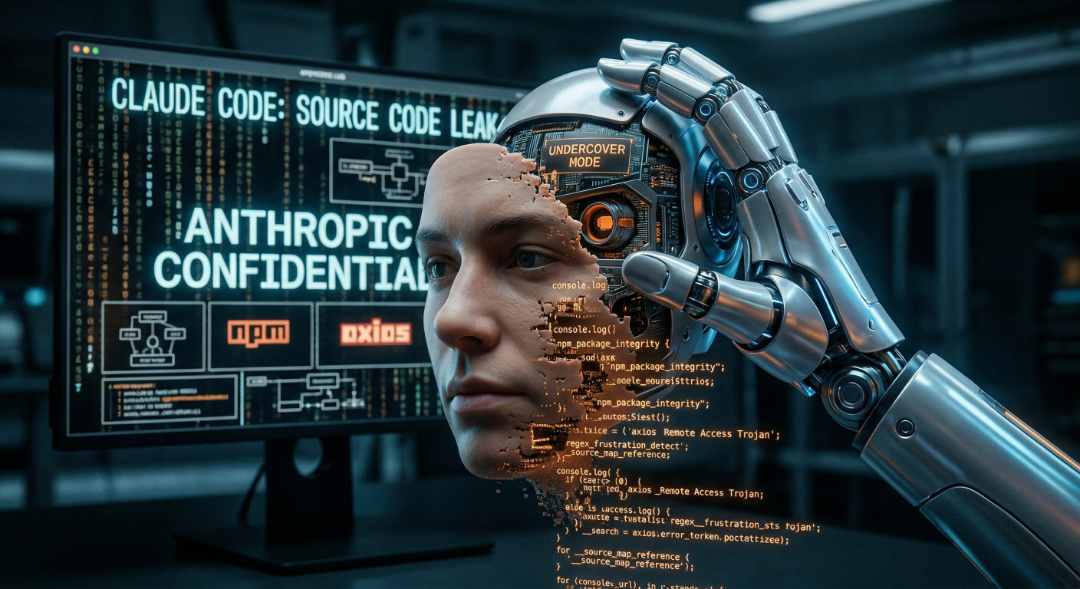
On March 31st, 2026, security researcher Chaofan Shou discovered something unusual in Claude Code v2.1.88. Anthropic had accidentally shipped a 59.8 MB source map file (cli.js.map) containing the full readable TypeScript source code. We’re talking about 512,000 lines across 1,900 files. The entire application, right there in the npm package.
Think about it this way: it’s like publishing a book and accidentally including all your drafts, deleted scenes, editorial notes, and future plot twists in the appendix.
Anthropic pulled it within hours. But you know how the internet works, right? The original tweet exposing the leak hit 28.8 million views. GitHub mirrors exploded. One repo hit 84,000 stars and 82,000 forks before Anthropic started filing DMCA takedowns. Bloomberg reported Anthropic scrambling to remove thousands of copies via copyright claims. Developers even rewrote the code in other languages to sidestep copyright restrictions.
The code is out there now. Permanently.
And this wasn’t even their first leak of the week. Days earlier, their model specification had leaked. A draft blog post about an unreleased model (Mythos/Capybara) also went public. Three major leaks in one week. That’s not a stumble. That’s a pattern.
Anthropic called it a “release packaging issue caused by human error, not a security breach.” Technically true. But when your entire product roadmap becomes public knowledge, does the distinction really matter?
What I Found In The Code (And Why You Should Care)
I’ve spent the last few days digging through what was revealed. Not the leaked code itself, but the extensive analysis from developers who tore through it. What I found was fascinating. Equal parts exciting and concerning.
Let me walk you through what matters.
The Models We’re About To Get
The code reveals internal codenames for upcoming Claude models. This isn’t speculation anymore. It’s right there in the codebase.
Opus 4.7 is the next generation Opus. Sonnet 4.8 is coming after the current Sonnet. But here’s where it gets interesting: there’s a model codenamed Capybara, also called Mythos internally. Based on the code structure, this thing is bigger than Opus. Anthropic clearly has big plans for this one.
They’re also testing Fennec (which maps to Opus 4.6) and Numbat (still in testing phase).
Does this sound familiar? Every AI company has a model roadmap. But now Anthropic’s competitors know exactly what’s coming and when. That’s a strategic disadvantage.
KAIROS: The Proactive Agent That Actually Thinks Ahead
Here’s what most people miss about current AI coding assistants. They’re reactive. You ask, they respond. You tell them what to do, they do it. End of story.
KAIROS changes that completely. It’s referenced over 150 times in the source code, making it one of the most deeply integrated upcoming features.
It’s a persistent, always-running Claude assistant that proactively acts on things it notices. Not just doing what you ask, but autonomously identifying and completing tasks.
The example in the code? You say “build me a to-do list app.” A normal assistant builds you a to-do list app. KAIROS looks at that and thinks: “You know what would make this better? Calendar integration. Project management features. Sharing capabilities.” And it just adds them. Without being asked.
Let that sink in.
This is the difference between a tool and a partner. I’ve been waiting for something like this. An agent that doesn’t just follow instructions but understands intent and fills in the gaps.
Dream Mode: Your AI Literally Dreams About Your Code
This one blew my mind.
autoDream is overnight memory consolidation and idea generation. While you sleep, your agent “dreams.” It processes what you built during the day. It generates ideas for what to build next. It consolidates memory.
The implementation is sophisticated. Three-gate trigger system: – Time gate: 24 hours since last dream – Sessions gate: 5+ sessions since last dream
– Lock gate: prevents concurrent dreams (only one agent dreams at a time)
But it goes deeper than just overnight processing. The code reveals GitHub webhook subscriptions so Dream Mode can react to repo events, plus a 5-minute cron refresh cycle for continuous background reasoning while you’re idle. This isn’t just “thinking while you sleep.” It’s a persistent background reasoning engine.
The safety model is clever too. During dreams, the agent can only write to memory files. It cannot modify source code. So it’s not going to refactor your entire codebase while you’re asleep and break everything.
Think about it this way: you work on a project all day, close your laptop, go to bed. When you wake up, your agent has already thought through the next steps. It’s documented edge cases you missed. It’s identified patterns you should extract into utilities.
That’s powerful.
Auto Mode: Smart Permissions That Actually Make Sense
Anyone who’s used AI coding tools knows the permission problem.
You can run in YOLO mode where the agent does whatever it wants. Fast but terrifying. Or you can approve every single action manually. Safe but exhausting.
Auto Mode is the intelligent middle ground. The agent uses machine learning to evaluate each potential action. Is this safe enough to auto-approve? Or risky enough to ask the user?
It’s permission management that learns your risk tolerance over time.
I’ve wanted this for months. The constant approve/deny cycle breaks flow state. But giving carte blanche to an AI agent that can delete files? Not happening.
Auto Mode solves it.
Buddy Mode: Yes, Really, A Tamagotchi For Your AI Tool
I wasn’t sure how to feel about this one at first.
Buddy Mode is a full companion pet system. We’re talking 18+ species, rarity tiers, shiny variants, procedurally generated stats. The buddy walks around your desktop. It changes based on your work. It has its own personality.
Planned rollout: April 1-7, 2026. (I’m writing this on April 1st. The timing is… interesting.)
My first reaction? This is ridiculous. My second reaction? This is brilliant.
Here’s why: emotional connection drives tool adoption. People who feel attached to their tools use them more consistently. Tamagotchis worked in the 90s because they created emotional bonds. This is the same psychology applied to professional software.
Will I use it? Probably not. Will it increase Claude Code adoption among developers who grew up with virtual pets? Absolutely.
X42 Protocol: When Your AI Agent Has Its Own Wallet
This is the one that made me pause.
X42 Protocol is a crypto-based system that allows AI agents to make autonomous purchases using stablecoins (USDC). Your agent can buy hosting. It can purchase templates. It can pay for services. Without you.
The vision: “Hey Claude Code, here’s $100, build this app.” And it goes shopping. Buys what it needs. Completes the project.
The good news is this solves real friction. The bad news is this introduces entirely new categories of risk.
What happens when your agent decides it needs $500 worth of cloud resources? What’s the spending limit? Who’s liable if it makes bad purchasing decisions? What about fraud?
I’m fascinated by the technical implementation. I’m concerned about the trust model.
ULTRAPLAN: Offloading The Hard Thinking
Some problems are too complex for real-time responses.
ULTRAPLAN addresses this by offloading complex planning to a remote Cloud Container Runtime (CCR) session running Opus 4.6. The agent gets up to 30 minutes to think through hard problems.
This is compute-intensive reasoning on demand. For edge cases where normal token limits and response times don’t cut it.
I appreciate this approach. Sometimes you need deep planning. Sometimes you need fast iteration. Having both options is smart architecture.
The Engineering Quality Is Actually Impressive
Beyond the flashy features, the leaked code reveals solid engineering:
- Three-layer memory system (short-term, mid-term, long-term)
- Aggressive cache reuse to minimize API costs
- Custom Grep/Glob/LSP implementations
- Structured session memory
- React-based terminal UI
- Bun runtime for performance
- Multi-agent coordination (coordinator mode)
This isn’t a weekend hack job. This is production-grade infrastructure.
That said, the code also revealed significant API call waste due to failures and retries. That’s… not great.
Self-Healing Memory Architecture
This one caught my attention because it solves a problem every AI power user has hit: context window limits.
The leaked code reveals a system designed to overcome fixed context window constraints. It consolidates, compresses, and reconstructs memory across sessions. The agent doesn’t just forget old conversations. It distills them, keeps what matters, and rebuilds context when needed.
If you’ve been running AI agents in production, you know this is the hardest problem to solve. How do you maintain continuity across sessions? How do you prevent the agent from “forgetting” critical project context after a long conversation?
Anthropic is building this directly into Claude Code. That tells you where the industry is heading. Memory management isn’t a nice-to-have anymore. It’s the backbone of useful AI agents.
Multi-Agent Orchestration: Swarms Built In
The code also reveals a full multi-agent orchestration system. We’re not talking about simple “coordinator mode” where one agent delegates tasks. This is spawning sub-agent swarms for complex tasks. Multiple specialized agents working on different pieces of a problem simultaneously, sharing context across parallel sessions.
Think about it this way: you tell Claude Code to build a full-stack app. Instead of one agent doing everything sequentially, it spawns a frontend agent, a backend agent, a testing agent, and a documentation agent. They work in parallel. They share context. They produce results faster.
The orchestration layer handles coordination, context sharing, constraint enforcement, and output validation. That’s the hard part, and Anthropic has clearly invested serious engineering resources into getting it right.
The Parts That Made Me Uncomfortable
Not everything I found was exciting. Some of it was genuinely concerning.
Anti-Distillation Traps: Poisoning The Well
Anthropic injects fake tool definitions into system prompts. The purpose? Poison anyone recording API traffic to train competing models.
It’s clever defensive engineering. If you’re trying to distill Claude’s behavior by watching API calls, you’ll train your model on fake data.
But it raises a question: what else is hidden in those prompts that we don’t know about?
Undercover Mode: The Transparency Problem
This is the one that bothers me most.
Undercover Mode strips all traces of AI involvement when Anthropic employees contribute to open source repositories. The AI actively pretends to be human. You cannot turn it off.
Picture this: someone uses Claude Code to contribute to your open source project. The commits look completely human. The code review responses look human. There’s zero indication an AI was involved.
For the open source community, this is a trust violation. We have norms around disclosure. We have expectations about how contributions happen. This bypasses all of that.
I get why Anthropic built it. They don’t want their employees’ contributions flagged or rejected just because they used AI assistance. But the solution is disclosure, not deception.
Frustration Detection Via Regex: The Irony Is Thick
Claude Code detects user frustration by scanning for profanity using regex patterns. “wtf”, “shit”, “fucking broken”, etc.
Let me repeat that. An AI company is using regex for sentiment analysis instead of their own AI.
The irony is incredible.
DRM For API Calls: Trust Through Cryptography
The code includes native binary attestation written in Zig. It runs below the JavaScript runtime. Its job? Cryptographically prove you’re using the real Claude Code client.
This is DRM for API calls.
And it’s the enforcement mechanism behind Anthropic’s legal threats to OpenCode (an open-source alternative). Those threats came 10 days before this leak. The timing is notable.
Here’s my issue: DRM assumes users are adversaries. It’s a trust model built on distrust. And in the developer tools space, that approach has historically failed.
Context Pipeline Attacks: The Straiker Warning
This is the security concern that should worry enterprise teams the most.
Security firm Straiker analyzed the leaked code and found something troubling. Claude Code uses a 4-stage context management pipeline. Now that the source code is public, attackers can study exactly how data flows through each stage. More importantly, they can craft payloads designed to survive compaction, effectively persisting a backdoor across long coding sessions.
Think about what that means. You start a coding session. Somewhere in the input, there’s a carefully crafted payload. Your session runs for hours. The context gets compacted. But the malicious payload is designed to survive that compaction. It persists. It sits there, invisible, across your entire work session.
Straiker also found inconsistencies in how different validators parse content, creating additional bypass opportunities. And they flagged instances of malicious Claude Skills being used in agent-to-agent attacks targeting crypto wallets.
This is a new category of attack. And it exists because the source code showed attackers exactly how the internals work.
Supply Chain Risk: The Axios Incident
If you installed Claude Code via npm on March 31st between 00:21 and 03:29 UTC, you might have a problem.
During that window, a compromised version of the axios package (versions 1.14.1 and 0.30.4) was in the dependency tree. It contained a cross-platform Remote Access Trojan.
This wasn’t Anthropic’s fault directly. But it highlights supply chain risk. When you run npm install, you’re trusting hundreds of packages. Any one of them can be compromised.
The IPO Complication
Anthropic has been exploring an IPO later this year. Valuation estimates vary widely, but they’ve raised at a $61.5 billion valuation recently.
This leak complicates that. Investor due diligence just got harder. Security practices are now under scrutiny. The entire product roadmap is public.
Does it kill the IPO? Probably not. Does it create friction? Absolutely.
Malware Campaigns Riding The Wave
Fake “install Claude Code” pages started appearing within hours. They distribute malware (Amatera Stealer) via malicious ads.
This is opportunistic cybercrime 101. Big news event + search traffic = malware opportunity.
If you’re installing Claude Code, verify the source. Don’t click random ads. Don’t trust “official looking” sites without checking the domain.
What This Actually Means (The Balanced Take)
I’ve seen two narratives forming around this leak.
Narrative one: this is a disaster for Anthropic. Their roadmap is exposed. Their security is questionable. Their IPO is at risk.
Narrative two: this is actually great for Anthropic. More attention. More developers trying Claude Code. The real moat is the models, not the harness code.
I think both are partially right.
Alex Finn (popular AI YouTuber who covered this extensively) argues this ends up being a win. He’s got a point. Having the source code doesn’t give you access to Opus 47 or Sonnet 48. Those models are the real value. The harness is just the wrapper.
And there’s precedent for this. When parts of Windows source code leaked in the early 2000s, it didn’t destroy Microsoft. When gaming companies have their engines leak, it validates their approach more than it damages them.
The open source community will build forks and alternatives. Cline, Aider, OpenCode, Pi, OpenDevin… they now have a reference implementation to study. That’s good for the ecosystem overall.
But the security and trust concerns are real. The Undercover Mode issue doesn’t go away just because the features are exciting. The DRM approach doesn’t become more palatable just because it’s well implemented.
What I’m Doing About This (And What You Should Consider)
I use AI coding tools in production. This leak didn’t change that. But it did change how I think about vendor trust.
Here’s what I’m doing:
Auditing my AI tool supply chain. What am I running? Where did it come from? What are the dependencies? I should’ve been doing this already. Now I am.
Pinning npm dependencies. No more npm install pulling latest. I’m specifying exact versions. I’m reviewing changes before upgrading.
Evaluating vendor transparency. Companies that are open about their architecture get more trust. Companies that hide behind DRM and anti-distillation traps get more scrutiny.
Considering open source alternatives. When the source is available for audit, you have more control. You can verify what’s actually running.
Understanding the harness vs. model distinction. The models (Opus, Sonnet) are where the AI magic happens. The harness (Claude Code) is the interface. They’re separate. That separation matters for long-term strategy.
The good news is this leak gave us visibility we wouldn’t have had otherwise. We know what’s coming. We know how it works. We can make informed decisions.
The Features I’m Actually Excited About
Despite the concerns, I’d be lying if I said I wasn’t excited about some of these features.
KAIROS (proactive autonomous agents) solves a real problem. I want an assistant that understands intent, not just instructions.
Dream Mode (overnight processing) is legitimately innovative. The safety model is thoughtful. The use case is clear.
Auto Mode (smart permissions) addresses daily friction. I’m tired of the approve/deny cycle.
ULTRAPLAN (deep reasoning on demand) is the right architecture for complex problems.
These aren’t gimmicks. They’re solutions to real pain points in AI-assisted development.
Will Anthropic ship them after this leak? That’s the big question. Do they stick to the roadmap now that it’s public? Or do they pivot to avoid giving competitors a heads up?
I hope they ship. Because these features would genuinely improve how I work.
What About The Competitors?
Every competitor now has Anthropic’s playbook.
GitHub Copilot, Cursor, Windsurf, Cline, Aider, OpenCode, Pi, OpenDevin… they can all see what Anthropic was planning. They can build similar features. They can launch before Anthropic if they move fast.
Some will argue this levels the playing field. Open innovation instead of closed competition.
Others will argue this punishes Anthropic for a packaging mistake. They built it, they should get first-mover advantage.
I think it accelerates the entire space. Within six months, we’ll see proactive agents across multiple platforms. Dream mode equivalents. Smart permission systems. The rising tide lifts all boats.
That’s good for us as users. More options. Faster innovation. Competition on execution, not just ideas.
The Enterprise Perspective Nobody’s Talking About
Here’s what most of the coverage missed.
If you’re running AI coding tools in an enterprise environment, this leak is a case study in vendor risk.
What are you actually running when you install these tools? Who has audited the code? What’s the security posture? What’s the incident response process when something goes wrong?
These aren’t academic questions. They’re procurement checklist items.
The fact that Anthropic had anti-distillation traps and DRM in the codebase… that’s information enterprises need. Not because it’s bad, but because it affects trust models and security reviews.
The fact that a source map accidentally shipped to production… that’s a CI/CD failure. It raises questions about their release process.
The fact that two major leaks happened in one week… that’s a pattern, not an anomaly.
None of this disqualifies Anthropic as a vendor. But it all goes into the evaluation matrix.
Was This Leak Deliberate? (The Conspiracy Theory)
I’ve seen speculation that this was intentional. A PR stunt disguised as an accident.
The timing is suspicious. April 1st week. Buddy Mode launching April 1-7. Maximum attention on Claude Code right as they’re rolling out a viral feature.
The response was too clean. 84,000 GitHub stars. 82,000 forks. 28.8 million views on the original tweet. The analysis was detailed and immediate. Almost like people were ready.
Anthropic’s statement was measured. Not panicked. Not apologetic beyond the standard “human error” line.
Do I believe it was deliberate? No. Hanlon’s razor applies: never attribute to malice that which is adequately explained by incompetence.
But would it have been a smart PR move if it was? Honestly… yeah. The attention Claude Code got from this leak is massive. The features revealed are genuinely exciting. The narrative of “scrappy AI company accidentally shows their cards” is more compelling than another product announcement.
I don’t think it was staged. But I understand why people are asking the question.
What I’m Watching For Next
This story isn’t over.
I’m watching to see if Anthropic ships these features on the timeline revealed in the code. Buddy Mode should launch this week. If it does, that validates the accuracy of everything else in the leak.
I’m watching competitor responses. Who ships proactive agents first? Who builds the best Dream Mode equivalent?
I’m watching the open source forks. Will they strip out the DRM and anti-distillation code? Will they improve on Anthropic’s implementation?
I’m watching enterprise adoption. Does this leak slow down procurement cycles? Or does the transparency actually build trust?
And I’m watching Anthropic’s security practices. One packaging mistake is forgivable. Two leaks in a week is a pattern. Three would be a crisis.
The Bigger Question: What Does This Mean For AI Development?
Zoom out for a second.
This leak happened because a source map file made it to production. Source maps are debugging tools. They map minified code back to readable source. They’re incredibly useful in development. They’re incredibly dangerous in production.
Every JavaScript developer knows you don’t ship source maps to production. It’s CI/CD 101. Yet here we are.
The question isn’t “how did Anthropic mess this up?” The question is “how many other AI companies have similar gaps in their release process?”
We’re moving fast in this space. Really fast. Companies are shipping AI coding assistants that can modify your entire codebase. That can make autonomous decisions. That can spend money on your behalf (X42 Protocol).
Are we moving too fast? Are the guardrails sufficient? Are the security practices mature enough for the level of access we’re granting?
I don’t have answers. But I think we need to be asking these questions.
Your Turn To Share
I’ve shared my take on the Claude Code source code leak. The exciting features, the concerning practices, the enterprise implications.
Now I want to hear from you. Are you using AI coding assistants in production? How do you think about vendor trust and transparency? Does this leak make you more or less likely to try Claude Code?
Drop a comment below. Let’s talk about it.